Ad Minoliti (Argentina, 1980) builds a nonbinary geometry that unfolds as a speculative universe, one where painting becomes a form of science fiction and abstraction— a method for imagining other ways of inhabiting the world. Across immersive installations, murals, textiles, animation, pedagogical devices, and collaborative environments, Minoliti weaves together queer ecologies, transfeminism, interspecies relations, radical tenderness, childhood, and architecture into an ever-expanding visual ecosystem.
Lives and works in Buenos Aires, Argentina.
For the artist, geometric abstraction is not merely a formal language but a site of possibility: a heterotopic space where the conventions of gender, identity, and representation can be dismantled and reconfigured. Within these imagined environments, childhood and the non-human emerge as radical figures through which to question anthropocentric hierarchies and reconsider which bodies are granted agency, autonomy, and the capacity to shape their own existence.For Minoliti, painting is never confined to the canvas; it spills into space, dissolving the distance between artwork and viewer to create immersive environments where abstraction is inhabited rather than observed. Although trained as a painter, and continuing to identify as one, the artist understands painting less as a medium than as an evolving field of relations. Their practice extends fluidly across prints, clothing, animation, architectural interventions, and collective forms of learning, challenging the boundaries traditionally assigned to fine art. Rejecting fixed distinctions between the human and the non-human, the organic and the synthetic, Minoliti expands painting into a collective, spatial, and pedagogical practice where aesthetic experience becomes inseparable from care, experimentation, and the ongoing negotiation of new forms of coexistence.
Lorem ipsum dolor sit amet, consectetur adipiscing elit. Suspendisse varius enim in eros elementum tristique. Duis cursus, mi quis viverra ornare, eros dolor interdum nulla, ut commodo diam libero vitae erat. Aenean faucibus nibh et justo cursus id rutrum lorem imperdiet. Nunc ut sem vitae risus tristique posuere.
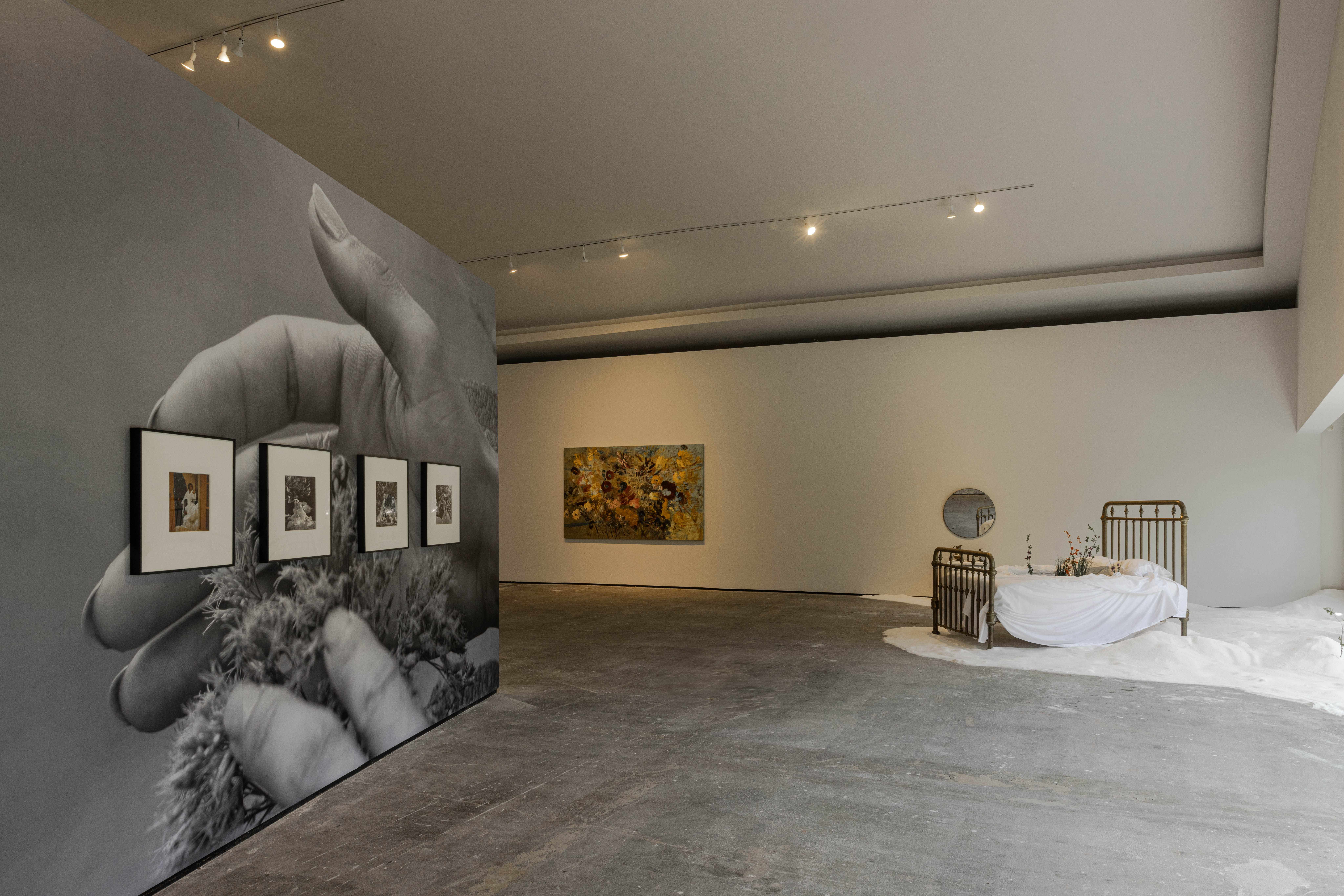
Based on the concept of “body-territory,” the exhibition proposes an intergenerational dialogue between works from the MAMM collection and the practices of contemporary artists from the region, understanding this connection as a space of identity, memory, re-existence, and contestation. Throughout the exhibition, the landscape becomes a character and the territory transforms into a body. The works evoke corporealities permeated by histories, materialities, violence, and resistance, as well as by the mystical, desire, and emotions. Amid mountain ranges, clouds, palm trees, mangroves, and rivers, multi-headed totems watch over, protect, and guide the visitor’s journey, preserving the memory of a forest for which they were created and which has now disappeared.
In Gallery A, the works are organized around three conceptual themes, named after three works by Débora Arango. The first theme, Mountains, highlights the symbiosis between body and landscape, in which hegemonic forms give way to other ways of being. The second theme, Adolescence, explores sensuality as an act of re-existence and resistance in the face of censorship. The third theme, Friné, denounces feminized corporealities as contested territory. This narrative unfolds through educational and performative elements. During the exhibition, Room D will be occupied by the Feminist School of Painting, a project by Ad Minoliti that proposes rethinking painting from a feminist and collective perspective.
Curated by: Marielsa Castro


Lorem ipsum dolor sit amet, consectetur adipiscing elit. Suspendisse varius enim in eros elementum tristique. Duis cursus, mi quis viverra ornare, eros dolor interdum nulla, ut commodo diam libero vitae erat. Aenean faucibus nibh et justo cursus id rutrum lorem imperdiet. Nunc ut sem vitae risus tristique posuere.
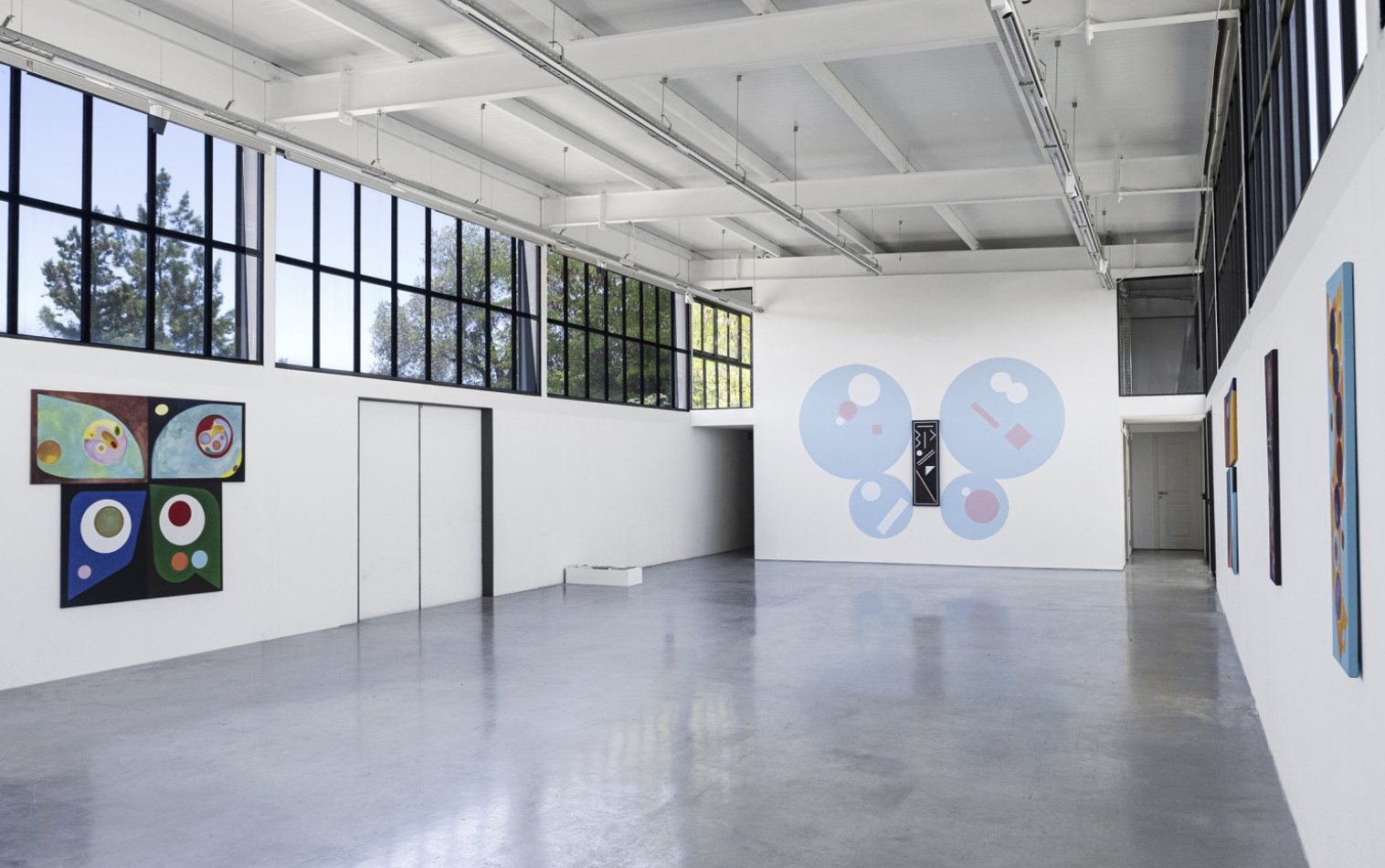
Monumento a una mariposa (Monument to a Butterfly) is a series of drawings and paintings where geometry takes the place of gender and species binarisms in regard to the life cycle of the Argentinean flag butterfly, known in Uruguay as the Coronillas butterfly. Visual manifestations of the transformations these flying insects undergo, from egg to caterpillar, from caterpillar to pupa and from pupa to butterfly, and of their passage from individuality to grouping together during the caterpillar stage, bring us closer to manners of gestating life which, for our urban imagination, verge on the fantastic. In this series, mutation imagery operates as a way of drawing us closer to what we have been taught to reject: the ugly, different or monstrous.
Ad’s anti-adult geometricization, on the other hand, constructs shapes for an empathy able to bypass the reflex reaction of repulsion. While butterflies are a universal symbol of beauty, caterpillars represent the extreme opposite, the non-human: an absolute otherness that provokes fear, disgust and even extreme violence. In the Argentinean flag butterfly’s life cycle, Minoliti finds a visual and affective void that offers a possible approach to forms of non-humanness and of empathizing not only with their colors and shapes, but with the totality of their ways of life. A coronillo tree, one that provides nourishment for this subspecies of butterfly—and after which it is named in Uruguay—was planted in the gallery garden. The ceramic plaque modeled by Cecilia to accompany it recognizes the need to rethink our connection with the environments around us, to develop empathy and solidarity, not just with butterflies, but also with all the insects that pester us, bite us and repel us, but are, nevertheless, essential in order for life on Earth to continue. For now, and while it grows, the little tree functions as a symbol, it is the sprouting of a monument that will one day be habitat.
Excerpt from a text by Sofía Dourron.


Lorem ipsum dolor sit amet, consectetur adipiscing elit. Suspendisse varius enim in eros elementum tristique. Duis cursus, mi quis viverra ornare, eros dolor interdum nulla, ut commodo diam libero vitae erat. Aenean faucibus nibh et justo cursus id rutrum lorem imperdiet. Nunc ut sem vitae risus tristique posuere.
In the same year Brazil hosts COP30, the United Nations Climate Change Conference in Belém, Pará, MASP presents the exhibition Histories of Ecology. This is the museum’s eighth exhibition since 2016 dedicated to exploring diverse, plural, and polyphonic histories. The show is not a direct response to the conference but rather proposes a broader perspective. Moving beyond the undeniable urgency of the climate crisis, the exhibition expands the concept of ecology itself. Through the work of artists, activists, and social movements, it examines the relationships between human and more-than-human beings—a category that encompasses animals, plants, rivers, forests, mountains and fungi.
The use of the term “ecology” instead of “nature” is, in this context, a deliberate conceptual decision. Unlike conceptions that isolate nature as an entity external to society, ecology is understood here as a relational web, a field of forces in constant transformation. This perspective challenges established dichotomies such as nature/culture, subject/object, and human/non-human. Such an approach resonates with contemporary calls for an “ecological turn” within the humanities and social sciences, which seek to rethink knowledge production by embracing a multiplicity of worlds and ecosystems.
Featuring artworks by 116 artists, the majority of whom hail from the so-called Global South, Histories of Ecology extends this network to forge alliances between the Global South and North, acknowledging that the climate crisis demands coordinated, solidarity-based, and urgent action. Many of the works reveal not only the devastating effects of colonialism, environmental racism, and global capitalism on bodies, territories, and ecosystems, but also their deep-rooted historical origins.


Lorem ipsum dolor sit amet, consectetur adipiscing elit. Suspendisse varius enim in eros elementum tristique. Duis cursus, mi quis viverra ornare, eros dolor interdum nulla, ut commodo diam libero vitae erat. Aenean faucibus nibh et justo cursus id rutrum lorem imperdiet. Nunc ut sem vitae risus tristique posuere.
Drawing on a body of work linked to geometric abstraction and gender and sexuality activism, Ad Minoliti proposes a new model of art education, transforming the exhibition hall into a space for theoretical and practical learning. The eighth edition of the Feminist School of Painting was conceived as a site-specific installation at Galeria Praça, a space that was once a classroom.
Upon entering the Grand Gallery, visitors can view the manifesto of the Feminist School of Painting, presented alongside a collection of abstract works from the Pinacoteca’s collection, created by women artists who have made their mark in Brazil from the 1950s to the present. The space features works by Ligia Pape, Judith Lauand, María Bonomi, Vista Schendel, Moussia Pinto Alves, Rebeca Carapia, and Tomie Ohtake.


Lorem ipsum dolor sit amet, consectetur adipiscing elit. Suspendisse varius enim in eros elementum tristique. Duis cursus, mi quis viverra ornare, eros dolor interdum nulla, ut commodo diam libero vitae erat. Aenean faucibus nibh et justo cursus id rutrum lorem imperdiet. Nunc ut sem vitae risus tristique posuere.
The Symposium on Expanded Painting and Speculative Fictions, a seven-week project conceived by Ad Minoliti in collaboration with contemporary artists, writers, and curators, will accompany an immersive installation created specifically for Lago Algo. The symposium will be led by Nicole Chaput, Gaby Cepeda, Paloma Contreras, Nicolas Cuello, Madeline Santil, Ana Segovia, and Susana Vargas Cervantes. This project is presented in collaboration with Agustina Ferreyra Gallery, as part of Ad Minoliti’s solo exhibition, JARDÍN [Garden], at BODEGA.


Lorem ipsum dolor sit amet, consectetur adipiscing elit. Suspendisse varius enim in eros elementum tristique. Duis cursus, mi quis viverra ornare, eros dolor interdum nulla, ut commodo diam libero vitae erat. Aenean faucibus nibh et justo cursus id rutrum lorem imperdiet. Nunc ut sem vitae risus tristique posuere.
The exhibition takes as its starting point a critical exploration of Biosphere 2 – the world's largest Earth science experiment, launched in the Arizona desert in 1984. This monumental project isolated eight people in airtight domes to study whether humans could create and sustain life in artificial environments such as space stations. Interested in how this experiment highlighted the colonial and capitalist intentions of space exploration, as well as perpetuating a patriarchal and monocultural society, Minoliti has created an experimental station that subverts these purposes, valuing all identities, experiences and abstract forms.
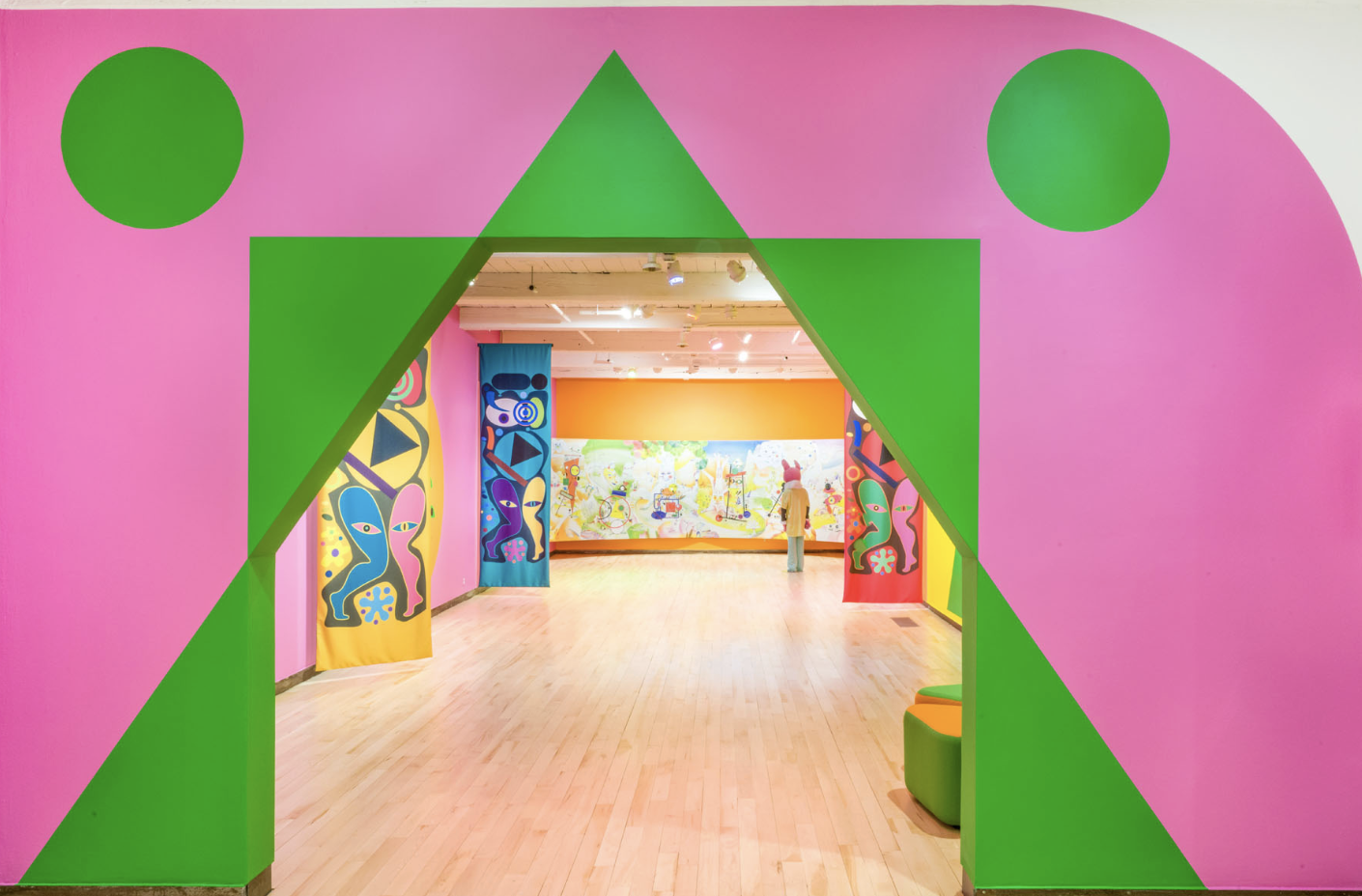
Using the gallery walls as a canvas, Minoliti’s colourful geometric murals set the scene for this new universe. Inside the imagined biosphere, new works from the artist’s Fables (Butterfly and Flowers) series use colour and shape to deconstruct gender roles. These are shown alongside works from Minoliti’s Space Playset series, often referred to as ‘cyborg paintings’ due to their origins as spray-painted images that are digitally manipulated, printed, and then overpainted by hand. Created by both human and machine, Minoliti invites viewers to question the distinctions we make between biology and technology. The space is also inhabited by hybrid creatures, who reference cartoons and contemporary subcultures popular online. These human-sized avatars, a species which Minoliti calls ‘Furries’, each have non-binary names and wear clothing designed by the artist alongside collaborator Lam Hoi Sin. Bringing together ideas from queer and feminist theory, animalism and childhood, Minoliti further encourages viewers to think beyond the categorisations that we make between things – male and female, terrestrial and alien, art and everyday life.


Lorem ipsum dolor sit amet, consectetur adipiscing elit. Suspendisse varius enim in eros elementum tristique. Duis cursus, mi quis viverra ornare, eros dolor interdum nulla, ut commodo diam libero vitae erat. Aenean faucibus nibh et justo cursus id rutrum lorem imperdiet. Nunc ut sem vitae risus tristique posuere.
Fantasías Modulares brings a Modernist past into a distinctly queer future. The exhibition’s title, for example, is motivated by Minoliti’s interest in modernist design and its embrace of modular elements that can be moved, separated, and reconfigured to produce new, mutable objects. She uses this methodology in her character construction — like the net-based project PLAY SIGNIFICANT OTHERNESS (2015) whose romping figures shake, share, and switch the shapes that assemble their geometric bodies — but also in her configuration of the gallery’s physical structure. Three curtains — blue, red, and yellow — are inhabited by dancing hybrid figures and flora. Their style departs from the creatures and works which surround them: Deep colors, retro flowers, and op art call back to a vintage aesthetic of the 1960s and 70's.
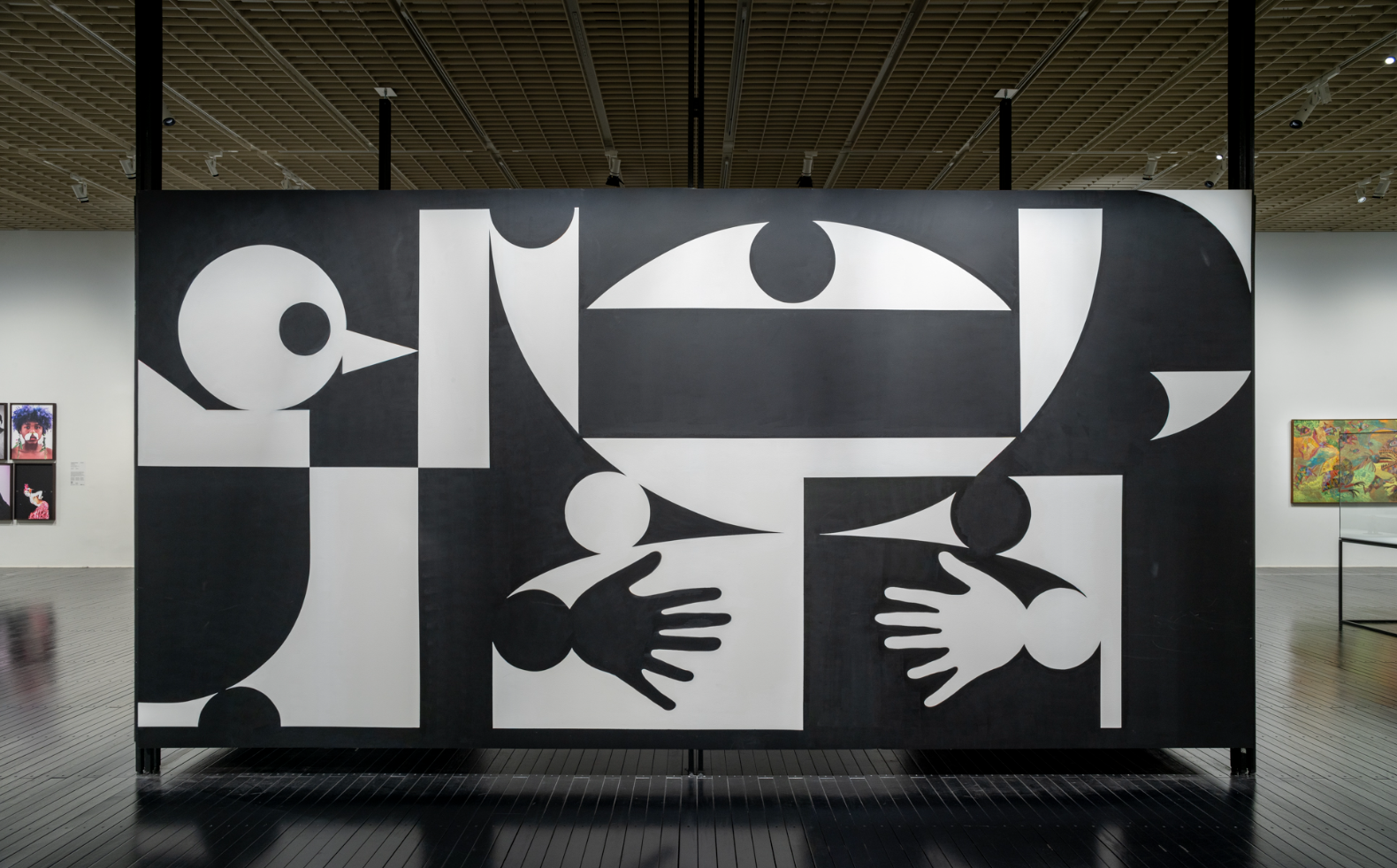
Grinning triangles, lounging cows, and winking circles populate the vibrant, queer landscapes of Ad Minoliti’s imagined worlds. Trained as a painter, Minoliti draws on the rich legacy of geometric abstraction in her native country, Argentina, where geometry was used as a tool for picturing utopian alternatives. By combining abstraction with playful figuration, Minoliti upends familiar fairy tales, turning them on their head. She is particularly interested in disrupting pictorial cultural norms that uphold traditional views of sexuality and gender.
The artist sees many of these cultural norms established in the formative stories of childhood. In contrast to these indoctrinations, Minoliti uses her work to picture alternate realities free of biases by utilizing diverse, colorful, and playful hybrid forms. Her characters are non-binary, challenging the usual categories of male and female, and also blurring boundaries between human, animal, and machine. Her work frequently unsettles anthropocentric views of the world and allows hierarchies between humans and non-humans to dissolve. Working in both two and three dimensions, and between the vocabularies of painting, sculpture, architecture, and design, the artist also collapses traditional categories in art history to harness a more capacious and fluid language. This activation of other beings, entities, and otherwise inanimate objects generates a multitude of possibilities — joyful, colorful, and inviting of a more inclusive world.


Lorem ipsum dolor sit amet, consectetur adipiscing elit. Suspendisse varius enim in eros elementum tristique. Duis cursus, mi quis viverra ornare, eros dolor interdum nulla, ut commodo diam libero vitae erat. Aenean faucibus nibh et justo cursus id rutrum lorem imperdiet. Nunc ut sem vitae risus tristique posuere.
For her first major solo exhibition, Ad Minoliti transforms the galleries of the Museum of Modern Art in Buenos Aires into a “stuffed animal museum” (Museo peluche). Drawing on her works from the past fifteen years, Minoliti recreates them, interweaves them, and presents them as inhabitants of a vast play space. Her paintings, murals, and installations create a vibrant imaginary world, nourished by her interests in abstraction, eroticism, architecture, and design.
After engaging with feminist and queer theories, which propose a vision of people and society in which there are no preestablished behaviors based on the male-female distinction, Minoliti became aware of the power of images to create a reality outside those traditional cultural patterns. Through colorful murals, endearing characters, and animated paintings, the artist focuses on reimagining the concepts that Western culture has conceived as opposites: the spiritual and the rational, nature and culture, seriousness and frivolity, the feminine and the masculine. By rethinking these binaries in relation to the arts, Minoliti brings to the fore in their works the forces rejected by modernity: the childlike, the tender, and the gentle. By highlighting these sensibilities, Minoliti helps to challenge not only the way art history and its protagonists have been constructed but also the image of the world as we know it.


Lorem ipsum dolor sit amet, consectetur adipiscing elit. Suspendisse varius enim in eros elementum tristique. Duis cursus, mi quis viverra ornare, eros dolor interdum nulla, ut commodo diam libero vitae erat. Aenean faucibus nibh et justo cursus id rutrum lorem imperdiet. Nunc ut sem vitae risus tristique posuere.
Your inquire has been received and we'll be in touch with you shortly