8M

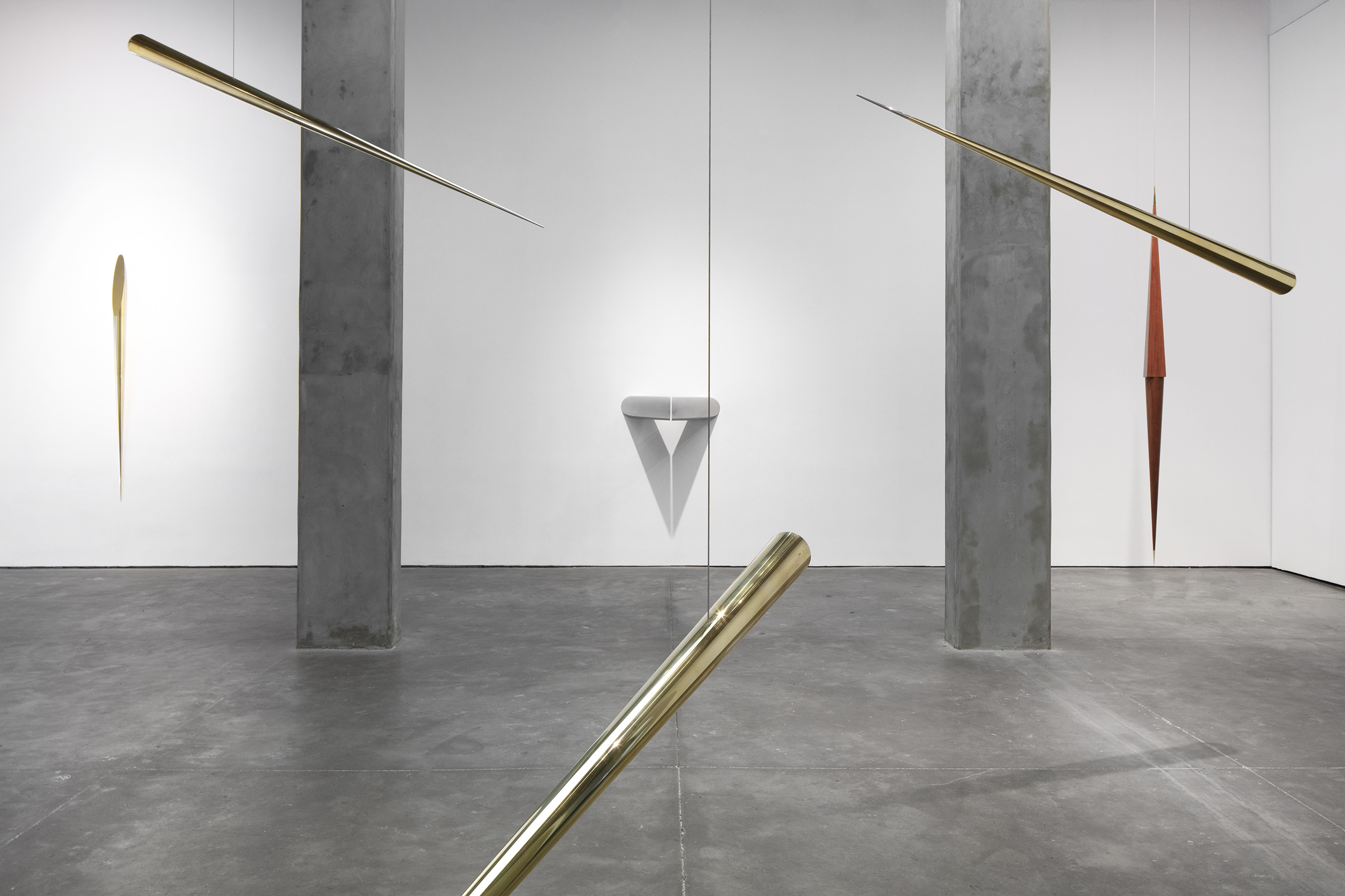
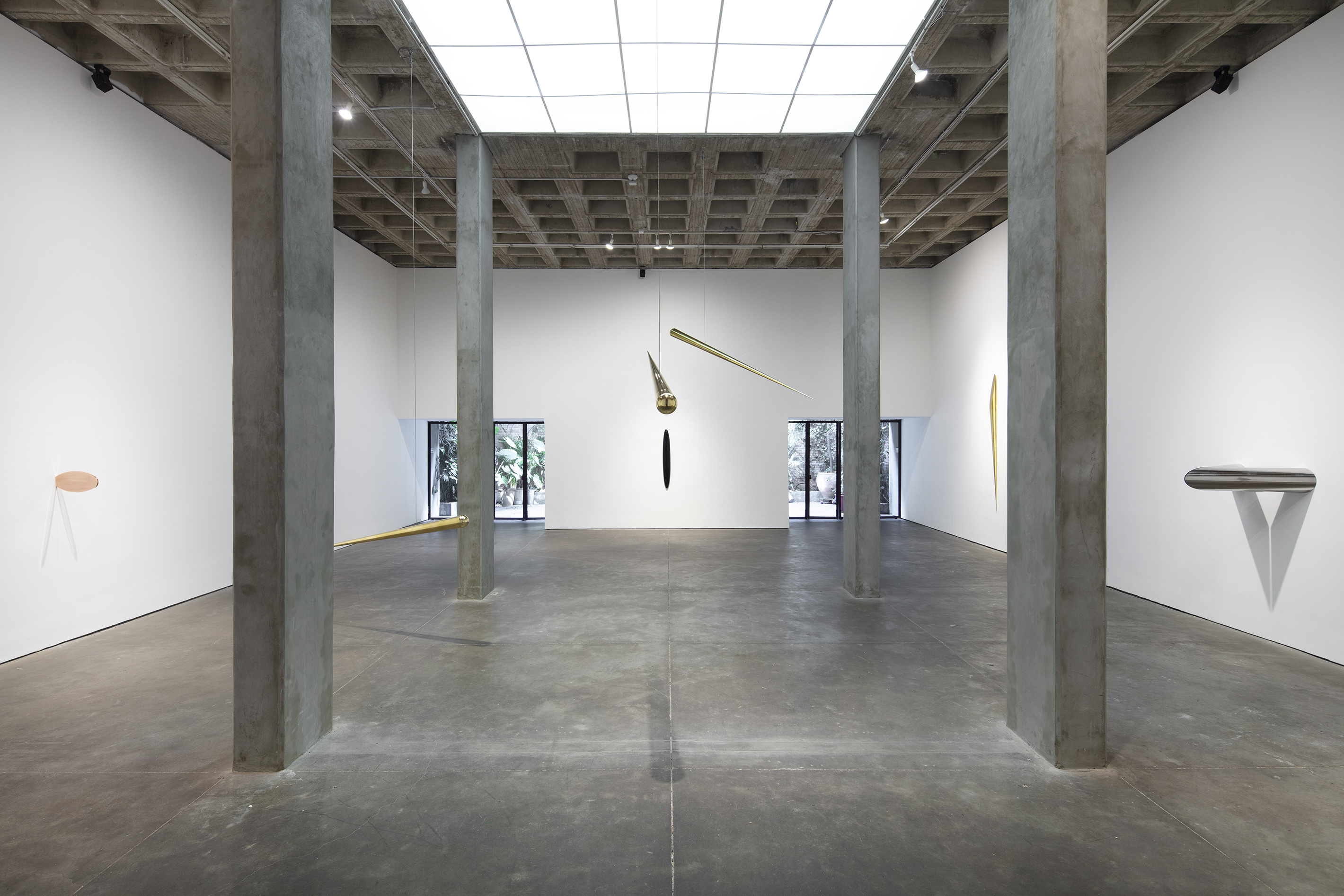
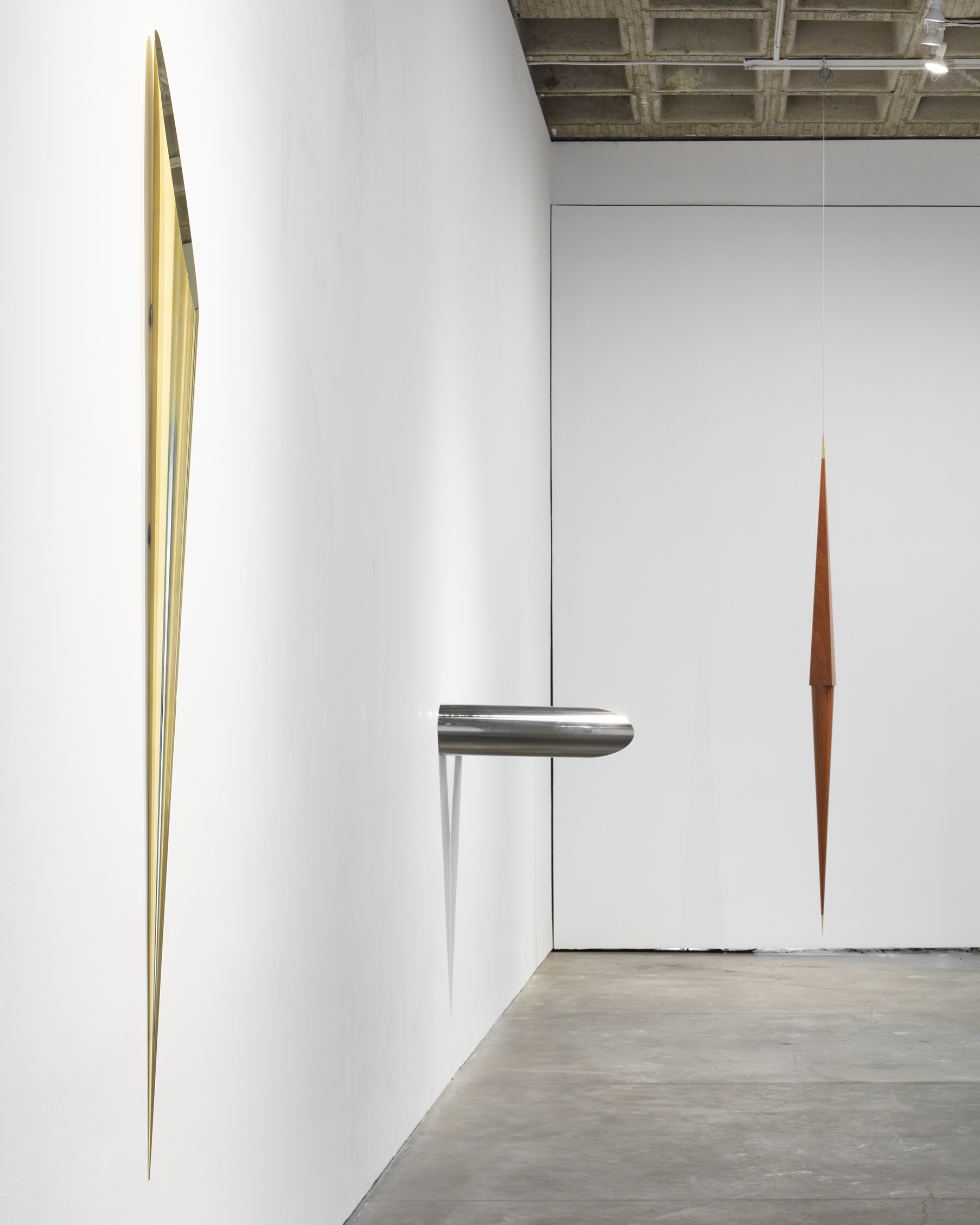
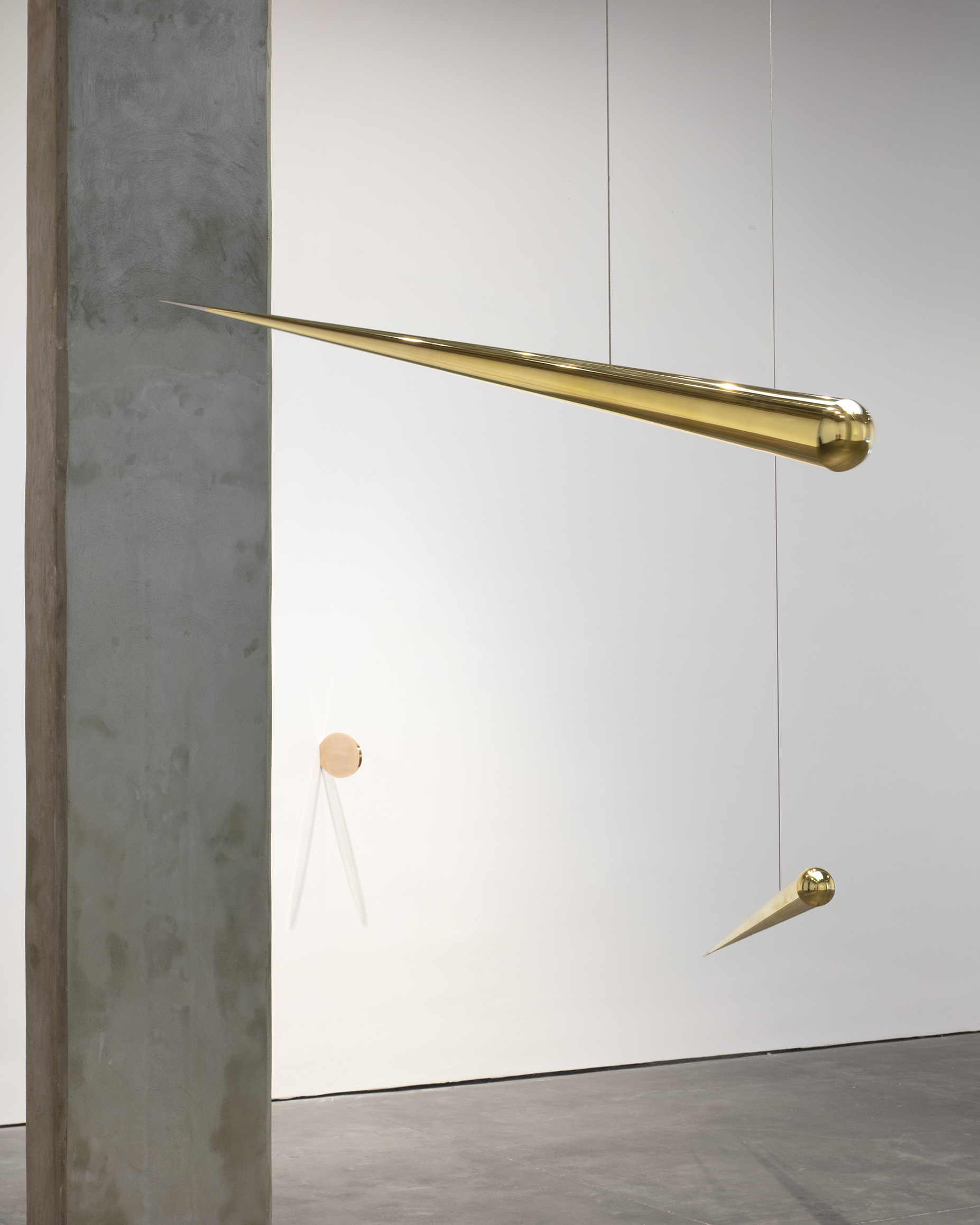
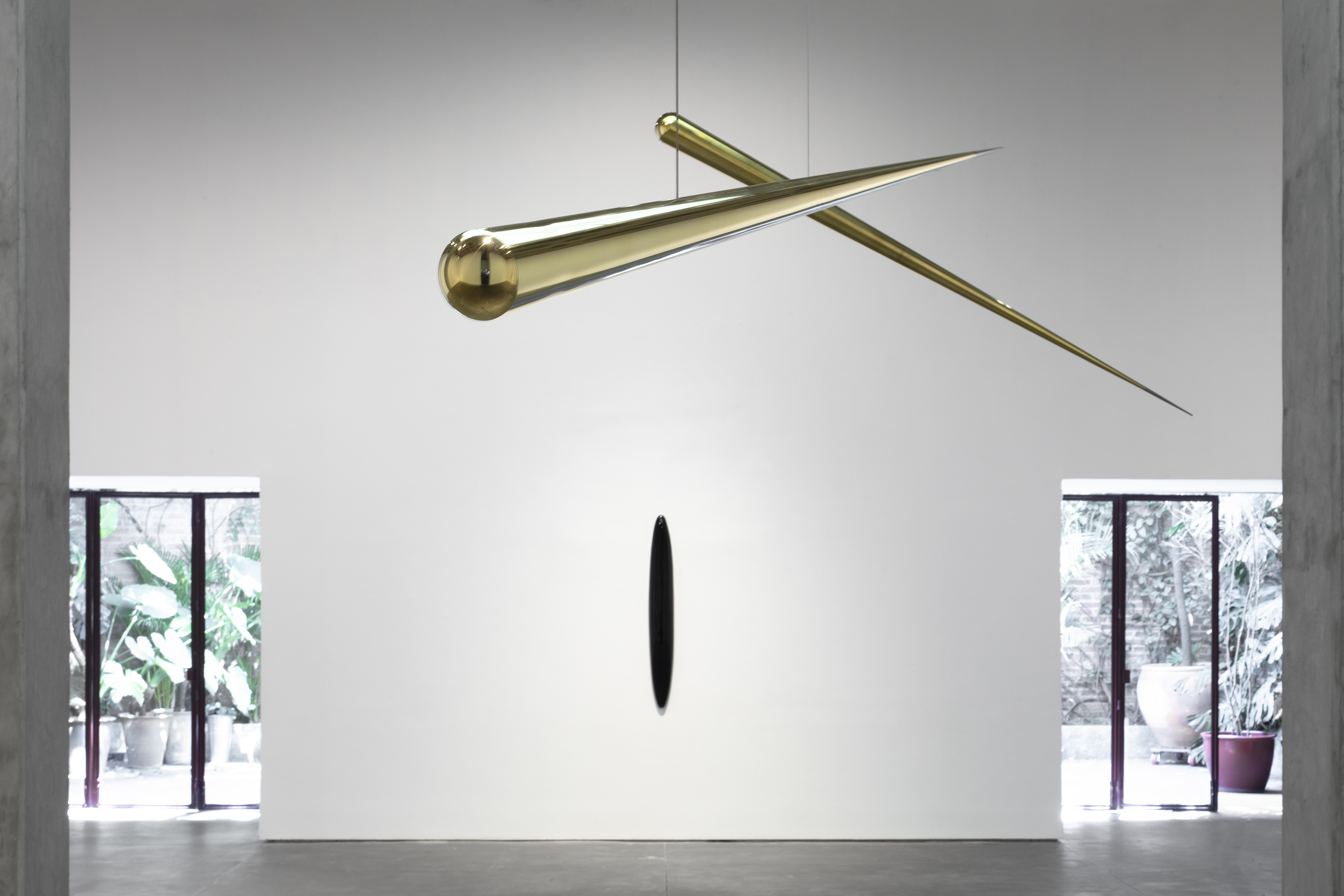
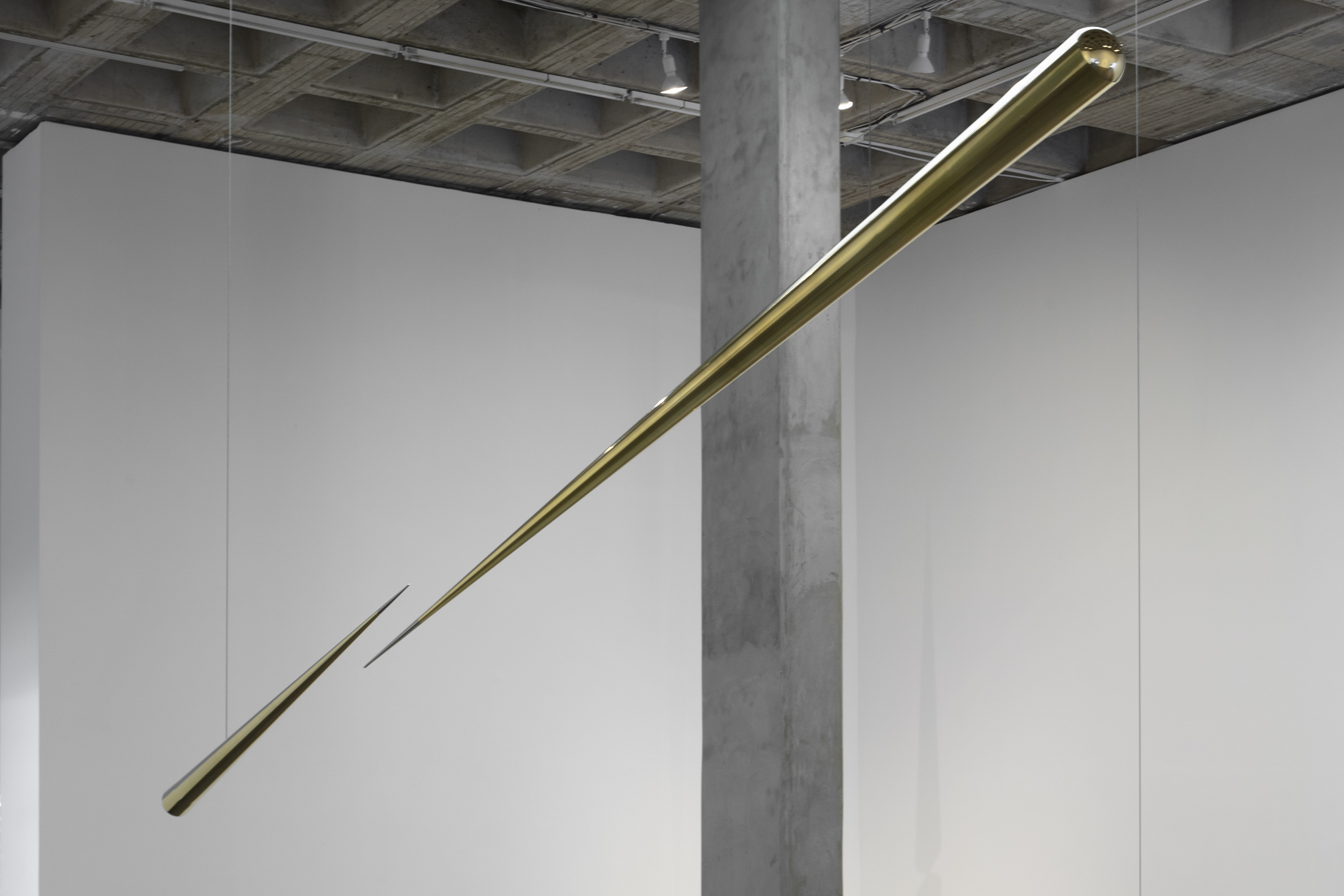
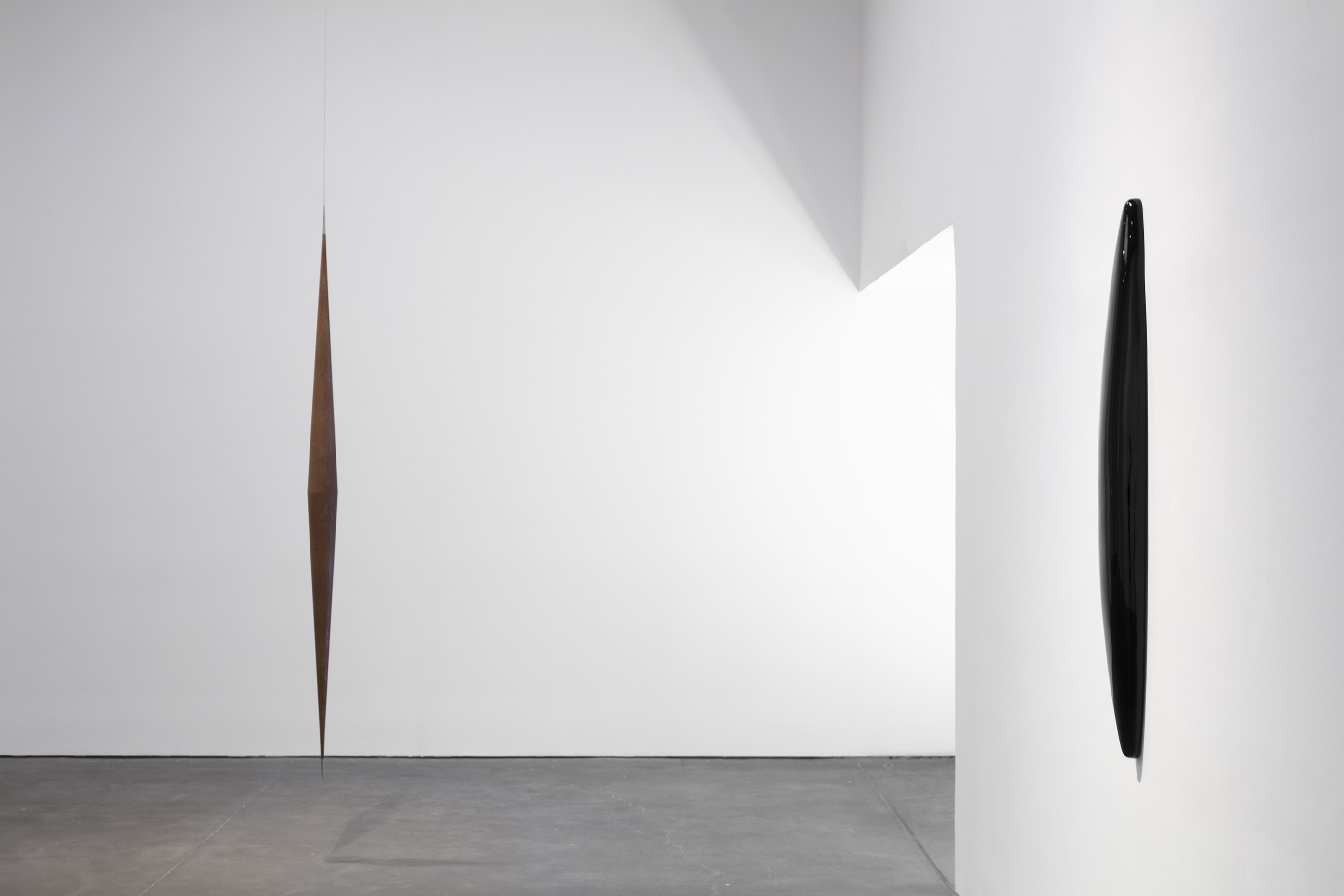
Artur Lescher’s sculptures are organized as a system of relations in which matter structures space through tensions, balances, and forces that are not always immediately visible.Tensioned cables, suspended volumes, and surfaces that absorb or reflect light establish precise conditions between weight and lightness, proximity and distance. Each material responds differently to these shared forces, generating variations within a single field. In this context, perception no longer operates solely through form. The body begins to register the forces that sustain the works: adjusting distances, anticipating movement, sensing instability. Sculpture thus unfolds not only in what is seen, but in what the body is able to perceive.
Brazilian psychoanalyst and writer Suely Rolnik introduced the concept of the vibratile body in Cartografia Sentimental (1989), and further developed it in books such as Micropolitics: Cartographies of Desire, a personal favorite, written in collaboration with Félix Guattari. Rather than a form or an identity, the vibratile body names a capacity: to be affected by forces; rhythms, tensions, pressures; that traverse the body in its relation to the surrounding world before becoming perceptible.
Taken as a point of departure, the title of this exhibition allows us to situate the work of Artur Lescher (São Paulo, 1962) with precision: not as a set of objects, but as a system of relations in which matter organizes space through forces that are not always immediately perceptible.
In Lescher’s work, the idea of the vibratile body shifts from the subjective to the material realm. It is no longer only the body that senses, but a field of resonance that emerges between matter, space, and perception.
Tensioned cables, suspended volumes, reflective or absorptive surfaces, and elements that appear still yet contain latent energy, form a system in which each part exists in relation to the others. Nothing is entirely fixed: everything is held in a precise balance of forces.
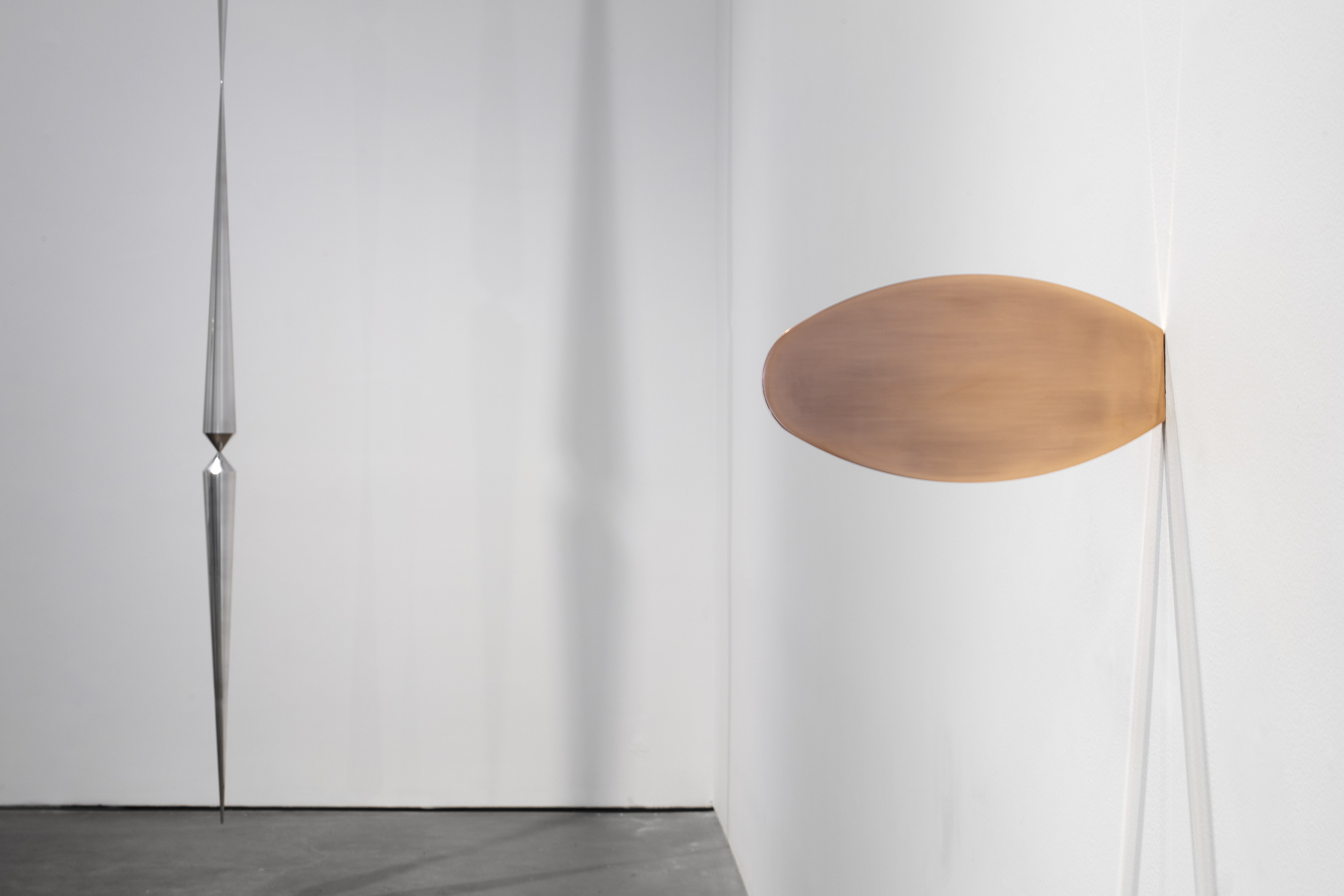
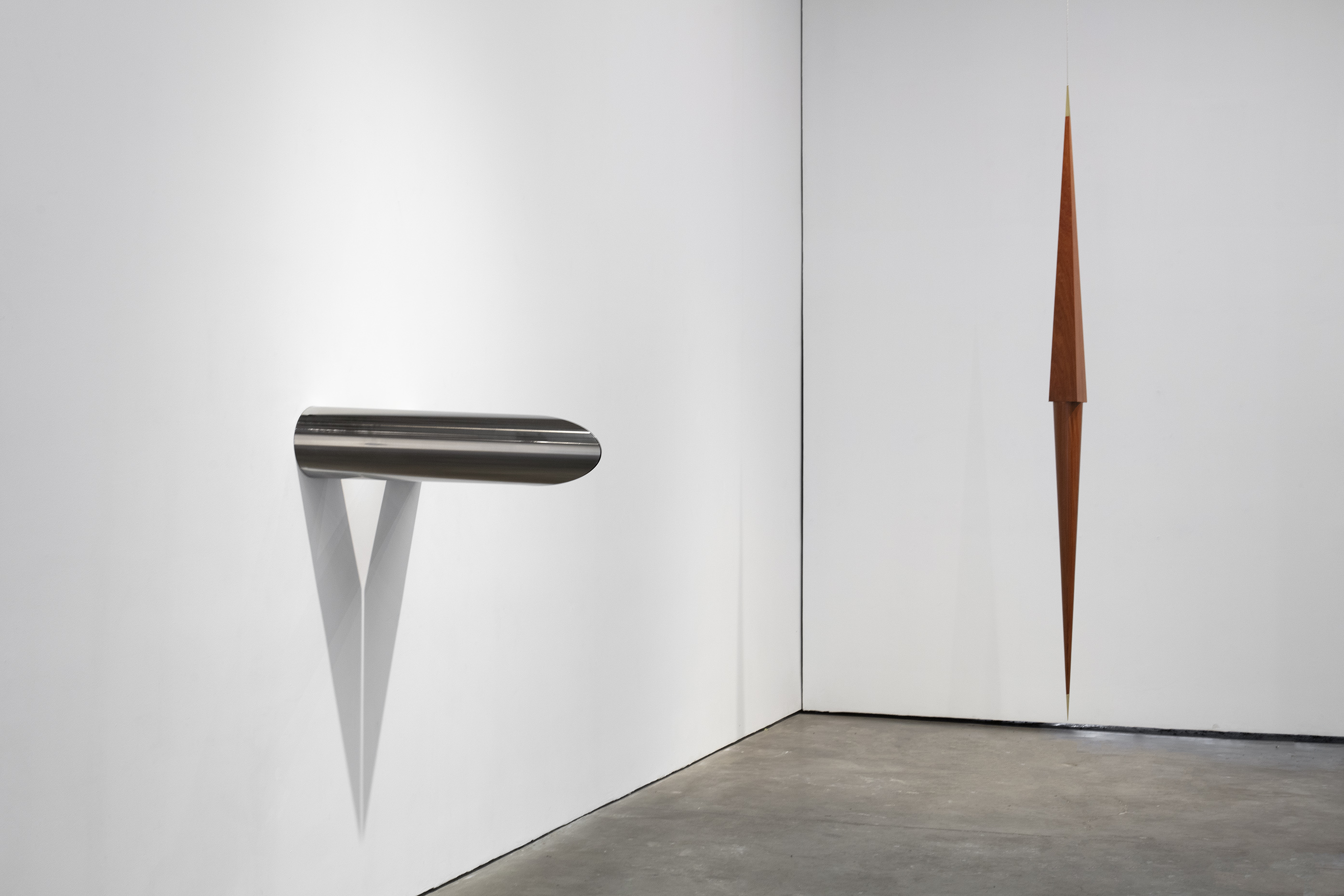
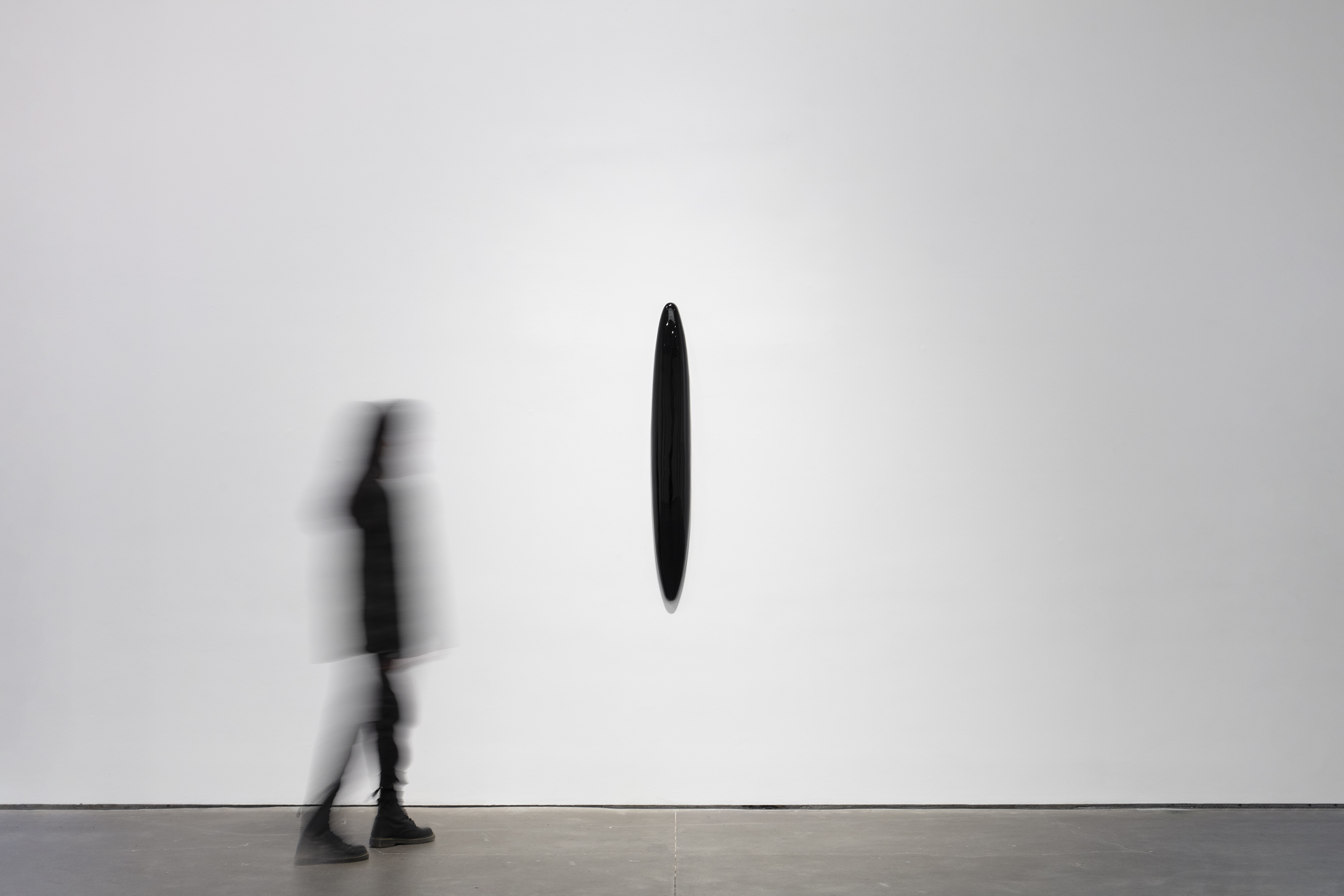
Each piece introduces a variation within this system. Aluminum and steel trace lines of tension that verge on the immaterial; bronze condenses vibration into a denser presence; obsidian absorbs light; wood introduces a more organic relation to form, weight, and surface. This is not simply a diversity of materials, but a multiplicity of responses to shared conditions: gravity, tension, equilibrium.
The works establish specific relational conditions, between weight and suspension, proximity and distance, continuity and interruption. They do not represent movement, yet depend on it as a constant possibility. What emerges is a sustained state of tension and vibration.
Within this context, perception no longer operates solely through form. The body begins to adjust to these conditions, measuring distances, anticipating shifts, registering instability. It is through this adjustment that the notion of the vibratile body comes into play with precision: a body that, in entering into relation with these structures, becomes affected by the forces that sustain them.
Tension, weight, and equilibrium, though not always visible, become perceptible to the extent that the body registers them.
In that process, the body no longer remains at the level of observation, but enters into relation with the forces that structure and organize space.
— Agustina Ferreyra


Lorem ipsum dolor sit amet, consectetur adipiscing elit. Suspendisse varius enim in eros elementum tristique. Duis cursus, mi quis viverra ornare, eros dolor interdum nulla, ut commodo diam libero vitae erat. Aenean faucibus nibh et justo cursus id rutrum lorem imperdiet. Nunc ut sem vitae risus tristique posuere.